Eggs, are so versatile, don't you think. You can poach, fry, scramble them. They can be made savory or sweet.
They are what I call, fast food, the original quick meal & so much better for you.
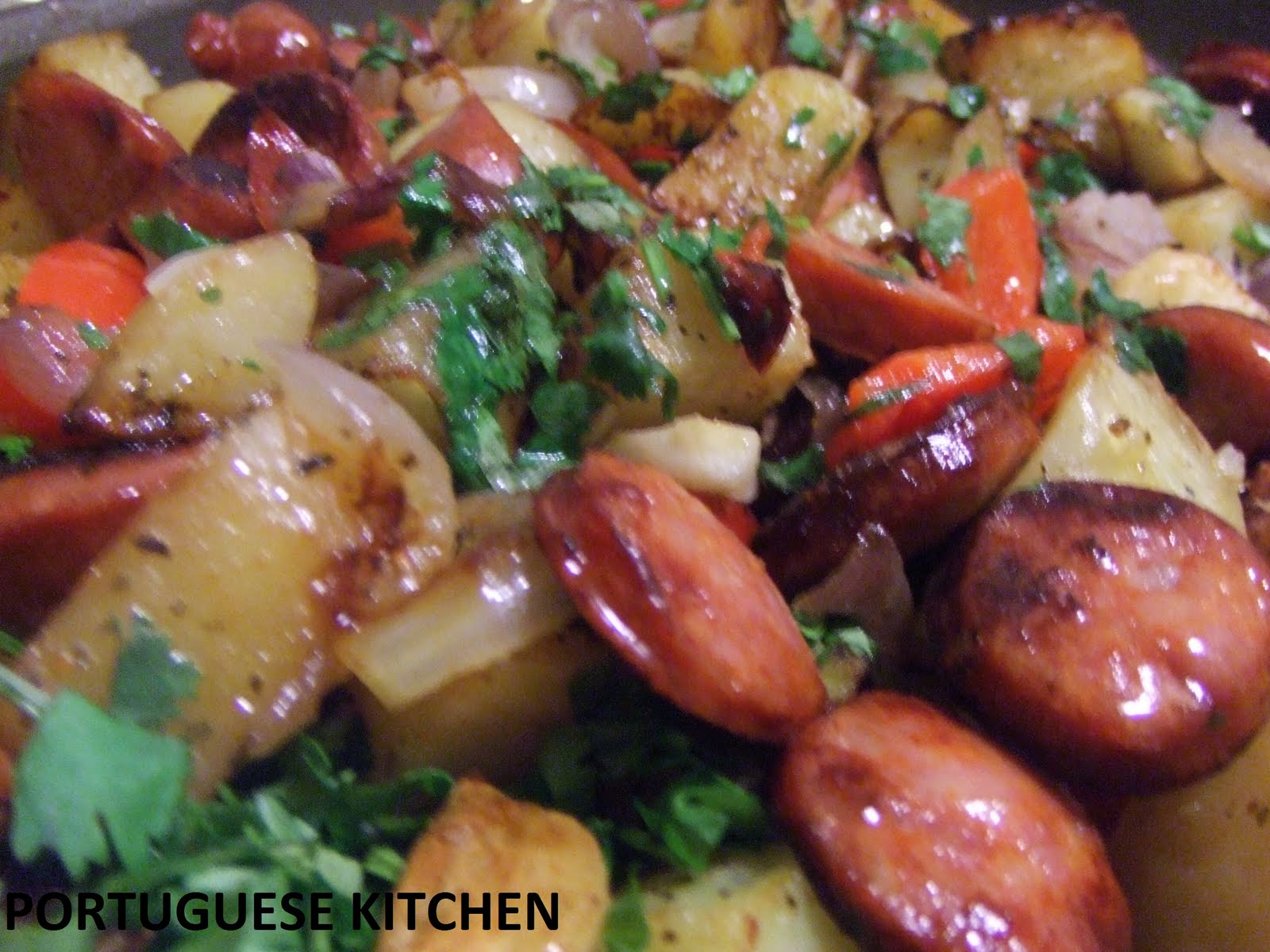
This is the type of food I love,especially for weekend brunch. On this particular day I made this dish for dinner.
I put this dish on the menu at the last cafe I worked at, before I left professional cooking.I'd label this dish as modern Portuguese, it has all the ingredients the Portuguese love, chorizo, potatoes, coriander & eggs.
Ingredients
6 medium potatoes, skin on
2 Spanish onions,chopped chunky
4 garlic cloves, chopped
2 chorizo, sliced
1 bunch coriander, chopped
2 capsicum, cut into chunks
2 tea paprika
2 tea mixed herbs, dried or fresh
salt & pepper to taste
200ml olive oil
1. Cut all the ingredients, separating each item into bowls.
2. Place the potatoes in a baking dish & sprinkle with 1 tea paprika, 1 tea herbs, salt & pepper,coriander stalks & coat the potatoes with 100ml olive oil. Bake in the oven for 20 min at 180 degrees, shaking the pan once in a while.
3. In a bowl add the rest of the ingredients, as well as the rest of the spices, herbs & oil.
4. Add the ingredients to the potatoes & bake till a further 20min.
5. Once cooked add the coriander leaves.
6. Leave in a warm place while you poach the eggs.
Poached Eggs
1 or 2 eggs
4 cups water
50ml white vinegar
1. In a deep saucepan add the water & vinegar & then bring the water to a boil, once boiling turn down the heat & simmer.
2. Crack your eggs into the water & cook for 1 1/2 min, your eggs will be soft if you want it harder then cook a further 1 min.
3. Place the potato & chorizo mix on a plate & then top your egg on top.
If there is one food that reminds me of Portugal, it's sardines. Sardines, bring back so many memories of my childhood. The distinct smell wafting in the air as they were barbecuing outside or pan fried & served with a salad of grilled capsicum & tomato in summer & served with tomato rice in the colder months.
The smell of sardines cooking, take me back to our terrace house in Surry Hills sitting around our table eating these small pilchards. I'd enjoy eating these but it wasn't long before I would start chocking on the small bones, without looking up or stopping what she was doing my mum would toss a small piece of bread my way & tell me to eat, this would dislodge the small bones she'd say.
The memory makes me laugh, we definitely weren't molly coddled as kids.
If Bacalhau (dried Cod fish) is the main course in the Portuguese diet then Sardines are the entree.
Sardines are so beloved by the Portuguese, you'll find them on every restaurant menu in Portugal. At home they are cooked simply usually whole as this retains flavor & moisture.
Ingredients
For the Sardines
12 sardines, gutted & scaled
1 cup plain flour
2 tea salt
1 tea white pepper
1 cup oil to fry (
Tomato & Capsicum Rice
1 cup rice
1 large white onion, small dice
4 garlic cloves chopped
100ml olive oil
1/2 capsicum, deseeded, chopped
3 bay leaves
1 1/2 cups tomato passatta (tomato pulp) if you don't have that use diced tomatoes
1 tea paprika
2 tea salt
4 cups water
2 tab parsley flat leaf
1. In a pot (heat should be a medium to hot flame) add the olive oil. Add the onion, garlic & fry for 1 minute then add the capsicum & bay leaves cooking for another minute. Add the rice & stir coating the grains with the oil. Then add the paprika & salt. Add the tomatoes & water. Bring the water to the boil on high heat, then reduce the heat to low & cover. Cook the rice for 20 minutes.
2. Before you cook the rice make sure the sardines are cleaned.
3. Put the flour, salt & pepper on a plate. Coat the sardines with the flour. Then in a fry pan heat the oil. Then fry the sardines. This should take 3 or 4 minutes on each side.
4. Once the rice is cooked switch off the heat. The rice should be wet. Be aware that the rice absorbs water, so you need to serve immediately otherwise your rice will be dry.
5. The sardines remain juicy & moist.
6. I love eating sardines this way in winter. The rice adds a bit of depth & warmth to the cool weather.
This is a restaurant right on the beach, not near it but right on it. It's location is in the Algarve, Portugal. The restaurant sign says Barbecued Sardines,the restaurant served different types of food which was simple & fresh.
I have a confession to make, a little secret I've kept to myself, something that's a bit embarrassing.
I like buying & making preserves, jams, chutneys & preserved fruit.The more unusual the more I want to buy it or make it. The thing is I don't really like eating them that much, if at all.
I know it sounds weird but I have this compulsion, I'm like a magpie who sees something shinny & just has to have it.
I just had to make these 2 preserves, as these are Portugal's most famous preserves. As I don't eat these I decided to give these 2 to my mum, for Mothers Day & sister in law.
Which made them extremely happy.
The Portuguese love sweet preserves, Quince Paste (Marmelada) is a staple in most Portuguese homes, & when I was in Portugal every household I visited brought out their home made version.
It's eaten in the morning for breakfast usually with bread & semi soft cheese.
Spaghetti Squash (DocedeChila) is used as an ingredient in cakes as well as for decorating them.
Once cooked it resembles threads, a bit like spaghetti, hence the name.
Many people in Portugal grow this vegetable & so make this preserve.
It's not so easy to find in here in Australia, I happened to come across it by accident.
One thing to remember when making the Spaghetti Squash is that the Squash can't be opened with a knife. You can either break it on the floor or you can get a pot & hit the squash with the pan,which is what I did.
Quince Paste (Marmelada)
3 large quinces (weighted 1350)
1kg caster sugar
lemon peel
1 cinnamon quill
1. Cut the quinces leaving the skin & pips on. In a pot add the quinces, lemon peel, cinnamon peel & cover with water. They will oxidise & discolour, don't worry about that, it'll add to the colour.
2. Cook the quince till very soft, this should take 45 min.Once cooked drain the quince in a colander reserving 100ml of the juice.
3. Mash the quinces (skin & pips) in a blender. Then sieve the quince to remove the pips & skin.
4. In a clean pot add the quince puree, 100ml of the reserved juice & the sugar. Then cook it on a low heat stirring every 10 min.
5. Cook until the mixture is thick & has changed colour, into a deep rich mahogany colour. The low heat will prevent the mixture from burning.
6. Once the quince is cooked scoop it into a bowl or any container.
Spaghetti Squash Preserve (DocedeChila)
1 spaghetti Squash (weigh the flesh)
sugar equals the weight of the spaghetti squash
400ml water
Spaghetti Squash
1. Hit the squash with a pan so it breaks open. Break it into pieces. Don't use a knife to cut it open. Scoop out the inside flesh using a wooden spoon.
2. Put the pieces of squash (skin & all) into a pot & fill with water & cook the squash till it's soft.
3. Once the squash is cooked scoop out the flesh, discarding the skin.
4. Once all the flesh is removed, weigh the squash. Then weigh out equal amounts of sugar. In a pan add the sugar & water & cook till it's syrupy,thick with no colour. Then add the squash & cook for 20min or till thick.
We're in May, it’s meant to be autumn, a time when it becomes cooler outside, leaves change, and everything slows down.
This year it’s been an incredibly hot summer & it seems to be never ending. The hot weather has carried on even during autumn. I’m not complaining mind you because I like the hot weather.
Autumn foods are starting to make their way into our supermarket shelves.
One of my favourite cooler months fruits are pears.
I love cooking pears, either stewing them or baking them.
I used Port wine in this recipe but you can use any sweet red wine you like.
Port wine comes from the Portuguese city Porto, & is a sweet wine usually drunk at the end of a meal.
Ingredients
4 pears
1 1/2 cups Port wine
6 tab honey
1 1/2 cups water
2 tea cinnamon, ground
1. Peel & core the pears.
In a roasting pan add the pears & all the ingredients.
Cover the pan with foil.
Cook the pears for 30 min at 180 degrees, then remove the foil & bake a further 20min.
The pears should be cooked & the juice should have reduced & thickened up
Before I post a recipe, I'd like to share a couple of sites that I follow.
I wanted to share with you my readers both these posts. It's in Portuguese so if you want to know what's been said than just go to google translator & it'll translate the post for you.
Basically the post is about a few bloggers who take a trip to the Algarve, take in some workshops, went market shopping checking out local produce.
They also went to some local restaurants.
We have some nice Portuguese restaurants in Sydney, but there a bit stuck in the 70's with not many fully trained chefs at the helm of many of these kitchens, don't get me wrong there great in a sort of home style sort of way, but their not the fine dining experience you get with many Italian, Japanese restaurant.
The posts show the best of Portuguese cuisine & a testament that food has evolved to a higher level in Portugal.
So great to see.
It's also the area my family is from, so I'm happy to show everyone the great produce this area has.
Here are both links enjoy.
This is the type of food I enjoy cooking when I'm feeling lazy.
I made this for dinner one night when I didn't feel like cooking. It so easy to make, 10 minutes tops.
Portuguese always have chorizo at hand it's a staple for any Portuguese kitchen.
You can make this for breakfast, brunch, or dinner.
Ingredients
6 eggs
1/2 cup milk
4 tab olive oil
pinch salt & pepper
1/2 medium onion, sliced
100g chorizo
2 garlic cloves, minced
2 tab chopped parsley, reserving some to garnish at the end
Crack the eggs into a bowl adding the milk, parsley, salt & pepper. Heat a pan on medium heat adding the olive oil, then fry the onions & chorizo for 3 min till slightly brown, then add the garlic, cooking till the onions are soft. Turn the heat up to high & then pour the egg mixture into the pan & stirring the eggs with a wooden spoon till the egg is cooked. Sprinkle a bit of parsley on top of the cooked eggs. I served the eggs with an olive & onion bread Serves 2 people
Bacalhau (dried salted codfish) to the Portuguese is what soy sauce is to Asians & what pasta is to the Italians. It plays such a huge part in the Portuguese diet & its psyche & without it, a huge part of its identity would go.
Codfish is almost always used dried and salted; the Portuguese invented this form of preserving the codfish long before refrigeration, a way to bring back their catch.
It's said there is 365 ways to make bacalhau, one for everyday of the year.
As a kid I wasn't keen on bacalhau, especially when it was made in the traditional way of boiling it with potatoes & vegetables & dressing it with olive oil & vinegar.
There is probably only about 4 ways that I like to eat my bacalhau & this dish is of course one of them.
Traditionally these cod cakes are made for special occasions, although you find then all over Portugal at local taverns & cafes, eaten as an entree or snack.
I've seen people use fresh fish for this dish thinking it's nicer or are a bit intimidated using dried codfish but try this version first, the taste is unique & well worth it.
These are addictive, there is no way you'll stop at 1 or 2.
Codfish cakes are eaten at room temperature usually on the same day as their made.
There are two ways to buy your bacalhau here in Australia, the first is in cutlet pieces, this comes with skin & bones, which have to be removed, or in a packet, which has the skin &bones removed.
I recommend the packet as it makes it so much more convenient.
Unfortunately I forgot to take a photo of the dryed codfish still in the packet before it was hydrated.
Ingredients
1kg potatoes
600g dryed cod (bacalhau)
2 garlic cloves
1/2 bunch parsley chopped
2 eggs
1/2 white onion,peeled & grated, juice squeezed out
1 teaspoon salt
1. Before you use codfish( bacalhau) you need to soak it to remove the excess salt, for 15-20hrs.
What I do is soak the fish the night before, after dinner I rinse the fish first to remove excess salt & then put it in a large bowl with enough water to completely cover it. Cover the bowl & refrigerate.
Then in the morning I remove the water & refill with fresh water & then leave it too soak a further 4 or 5 hours, changing the water at least another 2 times within this period . The way I know if enough salt has been removed is, I taste a bit of the cod.
2. Peel the potatoes & cook them in water until there soft.
Then strain the water from the cod & put the codfish in side a saucepan with cold water & bring to the boil.
As soon as the water has boiled the fish is cooked, strain the fish.
Put the cooked codfish inside a blender with the garlic cloves, grated onion & blend, till it's pulverised.
3. In a bowl add the pulverised codfish & the chopped parsley.
When the potaotoes are cooked mash them.
4. Add the codfish, potatoes, salt together & then add the eggs, mixing till well combined.
5. With 2 tablespoons shape the mixture into quenelles.
Fry the quenelles in clean medium/hot oil
Tips
Codfish is a firm textured fish, slightly dry, so there is no need to add flour to the mixture to hold it together
Squeezing the water out of the onion is necessary otherwise the extra water will make the mixture more watery
Frying oil must always be fresh otherwise the mixture will absorb the oil & be oily & horrible to eat
Weigh the codfish when it's still salted & not hydrated
Don't oversalt the dish, fry a small piece & taste it fist to see if you have enough salt added
You can buy you dryed codfish at any deli or if your in Sydney you can go to:
Charlie's Deli
37 New Canterbury Rd, Petersham
Ph: 9560 4037
Hi my name is Anna & I'm an Australian/Portuguese.Sydney is where I was born but I'm proud of my heritage & passionate about it's food.
I was a chef for 20 years before persuing other interests.Food for me is about sharing the best part of a person.I feel when you cook you give so much of yourself.
So my hope for this blog is to share the food & culture of this country,that is so much a part of who I am.




 6


